The Hidden Cost of Timber on UK Farms
Every year, UK farmers spend thousands on fence repairs—replacing rotted posts, mending broken rails, and rebuilding sections damaged by livestock. Traditional timber fencing seems cost-effective upfront, but the reality is different:
- Timber posts rot in 5-10 years (even when pressure-treated)
- Cattle and horses push against fences, snapping brittle timber posts at ground level
- Annual maintenance (creosote treatment, rail replacement) consumes valuable farm labor
- Emergency repairs during calving or lambing season can be disruptive and expensive
Recycled plastic agricultural fencing solves these problems permanently. Made from 100% post-consumer plastic waste, recycled plastic posts and rails offer:
- 25+ year lifespan with zero rot
- Flexible under load—bends with livestock pressure instead of snapping
- Zero maintenance—no creosote, no painting, no annual inspections
- Non-toxic—safe for livestock to lick or chew (unlike chemically treated timber)
In this guide, we'll explain why recycled plastic is ideal for UK agriculture—and how it saves farmers time and money over the long term.
Key Benefits for Agricultural Applications
1. Never Rots, Even in Wet Farmland
UK farmland is often waterlogged—especially in:
- Low-lying fields prone to flooding
- Gateways where livestock churn up mud
- Paddocks with poor drainage
- Water troughs and feeding areas (constant moisture)
Traditional timber posts rot rapidly in these conditions:
- Water absorption causes fungal decay (even in pressure-treated posts)
- Ground contact accelerates rot at the soil line
- Freeze-thaw cycles crack and split timber
Recycled plastic posts:
- 0% moisture absorption—water cannot penetrate the material
- Rot-proof in all conditions—performs identically in wet or dry soil
- No degradation at ground level—remains structurally sound for 25+ years
Result: Install once and forget about replacements.
2. More Flexible Under Load (Won't Snap When Cattle Lean)
Livestock exert significant lateral force on fencing:
- Cattle rubbing or scratching can push posts sideways
- Bulls fighting can snap brittle timber posts at ground level
- Horses leaning over fences to graze outside paddocks
Timber posts are rigid and brittle:
- High flexural modulus (8000-10000 MPa) means they don't bend
- Snaps at ground level when force exceeds breaking point
- Weakens over time as rot reduces structural integrity
Recycled plastic posts are more flexible (1225 MPa flexural modulus):
- Bends under load and springs back—absorbs impacts without breaking
- Higher impact resistance (14 KJ/m²)—tolerates bumps, kicks, and pushing
- Maintains flexibility over time—doesn't become brittle with age
Result: Fewer emergency repairs during calving, lambing, or breeding seasons.
3. Non-Toxic & Safe for Livestock
Traditional timber fence posts are treated with chemicals that can harm animals:
Creosote:
- Banned for residential use but still found on farms (old posts, second-hand materials)
- Toxic if ingested—causes digestive problems and liver damage
- Skin irritation—animals rubbing against creosoted posts can develop burns
Copper-based preservatives (CCA, ACQ):
- Leaches into soil—contaminates grazing land
- Harmful if licked or chewed—especially dangerous for horses
- Accumulates in liver and kidneys over time
Recycled plastic posts contain no toxic chemicals:
- Safe for all livestock—cattle, sheep, pigs, horses, goats, chickens
- Chew-resistant—animals can't damage posts (unlike timber, which splinters)
- No leaching—doesn't contaminate soil or groundwater
- Splinter-free—eliminates risk of injuries
Result: Peace of mind for organic farms, equestrian centers, and livestock breeders.
4. Eliminates Annual Maintenance
Traditional timber fencing requires constant upkeep:
- Annual creosote treatment (8-12 hours labor for 100m fence)
- Rail replacement (rot damage after 5-10 years)
- Post inspections (checking for wobble or ground-level rot)
- Emergency repairs (snapped posts, broken rails)
Recycled plastic fencing is 100% maintenance-free:
- No painting, staining, or chemical treatment
- No inspections needed—material integrity remains constant
- No emergency repairs—posts don't snap or rot
- Occasional cleaning—simple hosing to remove mud (water rolls off surface)
Result: Hundreds of hours saved annually—time better spent on livestock care or crop management.
5. Cost-Effective Over Time
Let's compare a 200-metre field boundary fence over 25 years:
| Cost Factor | Timber Posts (100mm × 100mm) | Recycled Plastic Posts (100mm × 100mm) |
|---|---|---|
| Posts (100 posts @ 2m spacing) | £1,200 | £2,400 |
| Rails (3-rail system) | £1,800 | £3,600 |
| Installation labor | £1,500 | £1,500 |
| Annual maintenance (creosote, repairs) | £200/year × 25 = £5,000 | £0 |
| Replacements (rot failure after 10-15 years) | £4,500 × 1 = £4,500 | £0 |
| Total 25-year cost | £14,000 | £7,500 |
Savings: £6,500 over 25 years (46% lower total cost)
Applications Across UK Farms
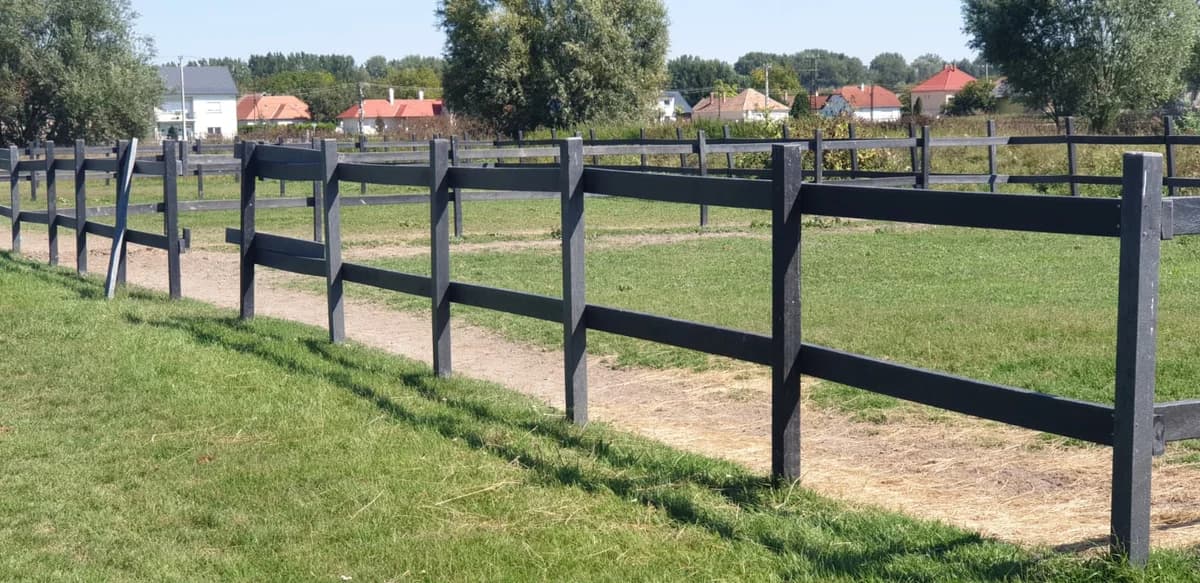
1. Paddock Fencing (Horses & Cattle)
Why it works:
- Flexible under load—horses leaning over fences won't snap posts
- Chew-resistant—eliminates crib-biting damage common with timber
- High visibility—available in white or bright colors for safety
- Splinter-free—no risk of injuries from broken rails
Typical setup:
- Post spacing: 2m-3m
- Rail configuration: 3-rail or 4-rail system
- Post size: 100mm × 100mm (standard) or 125mm × 125mm (heavy-duty)
- Ground burial: 800mm-1000mm
2. Field Boundaries & Livestock Enclosures
Why it works:
- 25+ year lifespan—no need to replace posts during farm ownership
- Rot-proof in all conditions—performs flawlessly in wet lowland fields
- Flexible under pressure—cattle pushing or scratching won't damage posts
- Low maintenance—no annual creosote treatment required
Typical setup:
- Post spacing: 2m-2.4m
- Rail configuration: 2-rail or 3-rail system
- Post size: 75mm × 75mm (sheep) or 100mm × 100mm (cattle)
- Ground burial: 600mm-800mm
3. Gateways & High-Traffic Areas
Why it works:
- Zero rot risk—even in churned-up mud around gates
- Won't warp or twist—gates hang properly for decades
- Impact-resistant—tolerates tractors bumping posts during feeding
- Easy to clean—pressure wash mud away (no absorption into material)
Typical setup:
- Heavy-duty posts: 125mm × 125mm or 150mm × 150mm
- Concrete setting: Essential for lateral loads from gates
- Stainless steel hinges: Prevents rust staining
- Post height: 1.8m-2.4m (depending on gate size)
4. Water Troughs & Feeding Stations
Why it works:
- 100% waterproof—never rots even when permanently wet
- Non-toxic—safe around drinking water and feed
- Easy to sanitize—smooth surface prevents bacterial buildup
- Chemical-resistant—won't degrade from sanitizers or water treatments
Typical setup:
- Post spacing: 1.5m-2m
- Post size: 75mm × 75mm or 100mm × 100mm
- Rails or boards: Smooth finish prevents livestock injuries
- Ground burial: 600mm (sufficient for light lateral loads)
5. Silage Clamps & Storage Areas
Why it works:
- High load-bearing capacity—supports heavy silage pressure
- Rot-proof—performs flawlessly in silage juice and moisture
- Chemical-resistant—unaffected by silage acids or decomposition
- Long lifespan—no replacement during farm operation
Typical setup:
- Heavy-duty posts: 125mm × 125mm or larger
- Concrete setting: Essential for lateral silage pressure
- Rails or boards: Create retaining wall structure
- Post spacing: 1.5m-2m (depending on load calculations)
Technical Specifications for Farm Fencing
Standard Agricultural Post (100mm × 100mm × 2.4m)
| Property | Value |
|---|---|
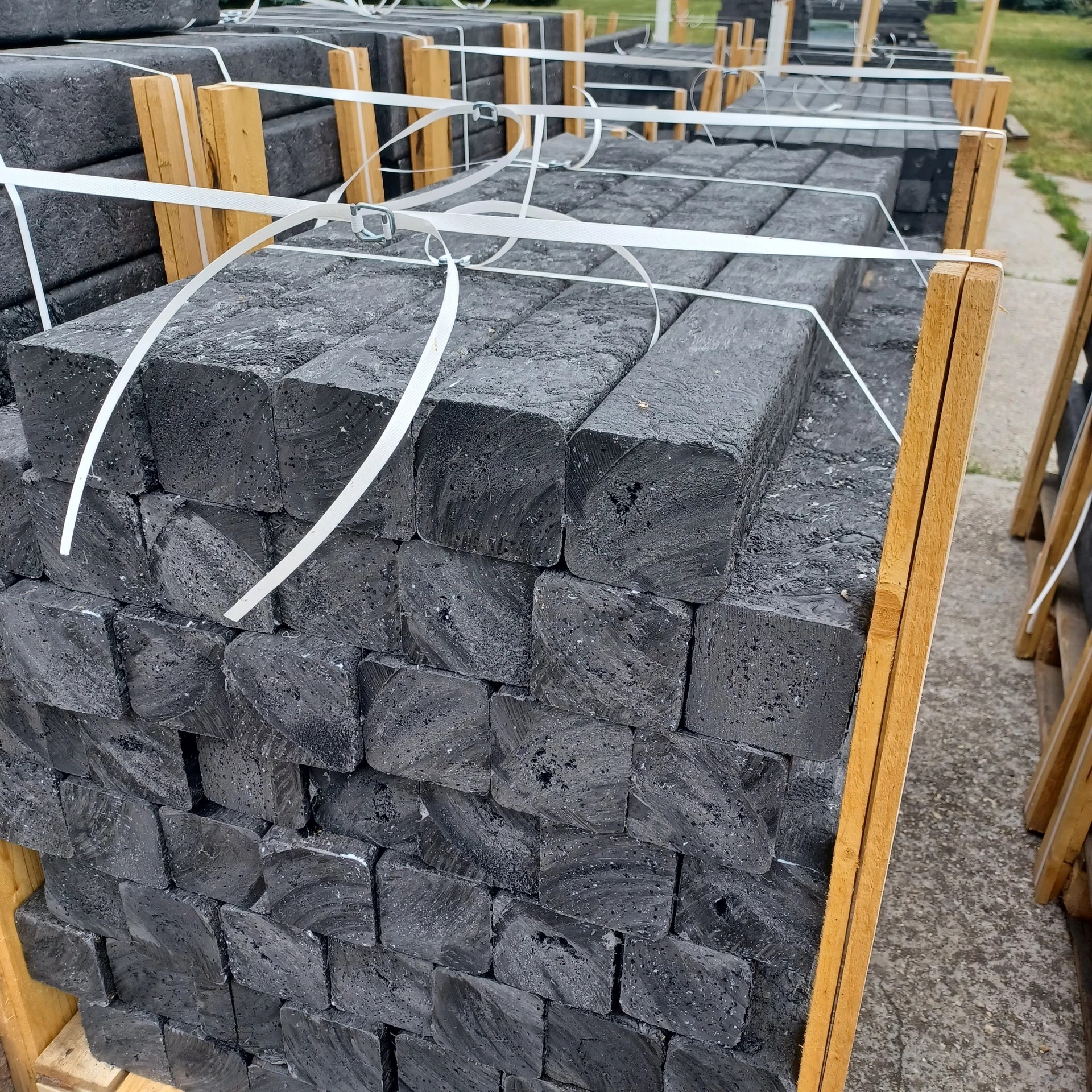
| Dimensions | 100mm × 100mm × 2400mm |
| Weight | ~12.5 kg |
| Tensile strength | 15 MPa (ISO 527-2) |
| Tensile modulus | 1445 MPa (ISO 527-2) |
| Flexural strength | 30 MPa (ISO 178) |
| Flexural modulus | 1225 MPa (ISO 178) — more flexible than timber |
| Impact resistance | 14 KJ/m² (ISO 179) |
| Ground burial depth | 800mm (recommended) |
| Above-ground height | 1600mm |
| Max rail span | 2.4m (3-rail system with livestock pressure) |
| Fire rating | Class E (self-extinguishing) |
| Temperature range | -20°C to +50°C (operational) |
Installation Best Practices
1. Post Spacing
- Sheep fencing: 2.4m-3.0m spacing (light lateral loads)
- Cattle fencing: 2.0m-2.4m spacing (moderate lateral loads)
- Horse paddocks: 2.0m-2.5m spacing (high lateral loads from leaning)
- Gates: 1.5m-2.0m spacing for gate posts (heavy-duty required)
2. Ground Burial Depth
- Standard rule: Bury posts at least 1/3 of total length below ground
- 2.4m post → 800mm below ground
- 1.8m post → 600mm below ground
- Soft or waterlogged soil: Increase burial depth by 20-30%
- Heavy livestock (bulls, large cattle): Use 125mm × 125mm posts with 1000mm burial
3. Post Setting Methods
Concrete (Recommended):
- Best for permanent fencing, gates, and heavy-duty applications
- Use postcrete or ready-mix concrete (20MPa minimum)
- Allow 24 hours to cure before attaching rails
Compacted Aggregate:
- Suitable for temporary paddocks or light-duty fencing
- Use MOT Type 1 aggregate (crushed stone)
- Compact in 100mm layers using tamping bar
Direct Burial (Not Recommended):
- Only suitable for very temporary fencing (e.g., rotational grazing)
- Compacted soil insufficient for lateral loads from livestock
4. Fixings
- Use stainless steel screws and brackets—prevents rust staining
- Pre-drill pilot holes—prevents cracking near post edges
- Avoid overtightening—plastic compresses more than timber
- Leave 5mm expansion gaps—allows for thermal movement
Environmental Benefits for Farms
1. Supports Sustainable Farming Practices
- 100% recycled material—diverts plastic waste from landfills
- No deforestation—reduces demand for timber logging
- Fully recyclable at end-of-life—true circular economy material
2. Protects Soil & Water
- No chemical leaching—eliminates creosote and copper runoff
- Safe for organic farms—meets Soil Association standards
- Protects watercourses—no toxic runoff into streams or rivers
3. Reduces Farm Carbon Footprint
- 70% lower energy to produce than virgin plastic
- 25+ year lifespan = fewer replacements—reduces manufacturing emissions
- Lower maintenance = less diesel consumption—fewer tractor trips for repairs
Why Choose Ezotrade for Agricultural Fencing?
✅ 100% Recycled Plastic
Every post and rail diverts plastic waste from landfills—supporting the circular economy.
✅ UK-Based Supply & Delivery
Fast delivery across England, Scotland, and Wales. Bulk pricing for farm orders.
✅ Custom Lengths Available
Need posts longer than 2.4m? We supply custom lengths up to 6m for specialized farm applications.
✅ Technical Support
Not sure which post size you need for your livestock? Our team can help calculate load requirements and recommend the best solution.
✅ Trade Accounts for Contractors
Fencing contractors and agricultural suppliers: Contact us for competitive trade pricing and account terms.
Get Started with Recycled Plastic Farm Fencing
Ready to install fencing that lasts 25+ years with zero maintenance?
Request a quote: Tell us your fencing requirements (length, livestock type, post spacing) and we'll provide a detailed quote.
Order samples: See and feel the quality of our recycled plastic agricultural posts before placing a bulk order.
Speak to our team: Call us for technical advice on post sizing, installation methods, and load calculations for your specific livestock.
Keep Reading
- Recycled Plastic Fence Posts: The Rot-Proof Solution for UK Fencing
- T&G Boards for Stables: Hygienic, Safe & Easy to Clean
- Why Recycled Plastic Outlasts Timber: Durability, Moisture & Lifecycle Facts
Shop Related Products
Ezotrade Ltd — Supplying 100% recycled plastic building materials to UK farms and agricultural businesses.