Solid Plastic Decking Boards: The Ultimate Maintenance-Free Solution
Outdoor decking has transformed the way we use garden and patio spaces, but traditional timber decking brings significant challenges—rot, splinters, warping, and relentless maintenance. Hollow composite decking promised a solution but introduced its own problems with trapped moisture, mould growth, and structural weakness.
Solid plastic decking boards represent the next evolution: a completely maintenance-free, rot-proof, and incredibly durable alternative that outperforms both timber and hollow composites in every critical area.
The Problem with Timber Decking
1. Rot & Decay (5-10 Year Lifespan)
Even pressure-treated timber:
- Absorbs moisture through cut ends and fastener holes
- Rots from the inside out—often invisible until boards collapse
- Requires replacement within 5-10 years in the UK climate
2. Constant Maintenance
Timber decking demands:
- Annual re-staining or oiling (£300-£800 labour + materials)
- Pressure washing (can damage surface fibres)
- Splinter removal (safety hazard for bare feet)
- Board replacement (rotted sections)
3. Warping & Twisting
As timber dries and absorbs moisture cyclically:
- Boards cup and twist—creating trip hazards
- Gaps appear—uneven spacing
- Fixings loosen—nails pop up
4. Splinters & Surface Damage
- Dangerous for children and pets
- Barefoot walking becomes hazardous
- Furniture scratches and damages the surface easily
The Problem with Hollow Composite Decking
Hollow composite boards (wood fibres + plastic) seem like an improvement, but:
1. Water Ingress
- Open ends allow water in—even with capping
- Freezing water expands—cracks the board from inside
- Mould grows inside hollow chambers
2. Structural Weakness
- Hollow core means less load-bearing capacity
- Can crack under point loads (heavy furniture)
- Flexes more than solid boards—feels unstable
3. Fade & Staining
- Wood fibres absorb moisture—causing stains
- UV fading is common (especially on cheaper products)
- Mould on surface—particularly in shaded areas
4. Still Requires Maintenance
Despite marketing claims:
- Needs annual cleaning with specialist products
- Mould treatment required in damp areas
- End caps must be maintained to prevent water entry
How Solid Plastic Decking Solves All These Problems
100% Solid Core—No Hollow Chambers
Solid plastic boards are dense throughout:
- No water ingress—nowhere for moisture to collect
- Maximum strength—supports heavy loads without flexing
- No mould growth—no organic material to feed on
Completely Waterproof (0% Absorption)
Unlike timber or composites:
- Absorbs zero moisture—no swelling, no rot
- Performs flawlessly in all UK weather conditions
- Can be installed in ground-contact applications
- No seasonal movement—remains stable year-round
Rot-Proof & Maintenance-Free
Solid plastic decking:
- Never rots—no organic material to decay
- Never needs treating—no staining, oiling, or sealing
- Just wash with water—that's the only maintenance
- 25+ year lifespan—with zero maintenance costs
Non-Slip Surface
The textured surface:
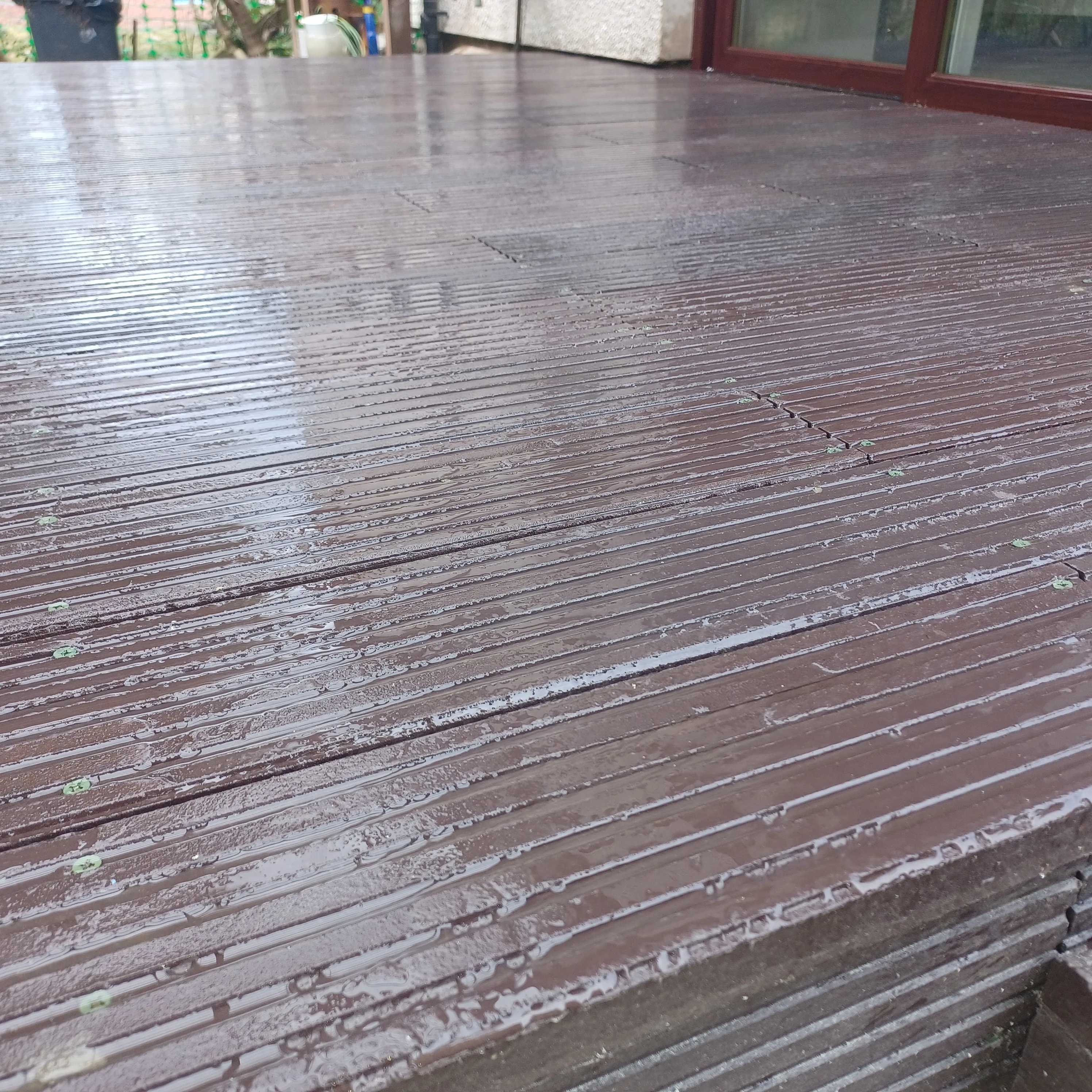
- Provides grip even when wet
- Safe for bare feet—no splinters
- Safer than wet timber—which becomes dangerously slippery
UV-Stable Colour
Modern solid plastic boards:
- Resist UV fading—colour remains consistent for decades
- Won't go grey like untreated timber
- No staining—wipes clean easily
Technical Specifications
Material Composition
- 100% recycled plastic (HDPE)
- No wood fibres—no organic material
- UV stabilizers throughout (not just surface coating)
Dimensions
| Size | Typical Use |
|---|---|
| 35mm × 120mm | Standard residential decking |
| 35mm × 140mm | Wider boards for modern look |
| 40mm × 150mm | Commercial/high-traffic areas |
Standard Lengths
- 2400mm, 3000mm, 3600mm, 4800mm
- Custom lengths available
Weight
- Approximately 1.5× timber weight
- Heavier than hollow composite
- Advantage: Superior stability, won't blow away during installation
Load Bearing
- High compressive strength—suitable for heavy furniture
- Resistant to point loads—won't dent or crack
- Supports full vehicle weight (when properly supported)
Temperature Performance
- -20°C to +50°C operational range (melts at 180°C)
- No cracking in cold
- No softening in heat
- Thermal expansion: 0.11 mm/m/°C
Installation: What You Need to Know
Subframe Requirements
Solid plastic boards can be installed on:
- Timber joists (traditional method)
- Steel frame (commercial applications)
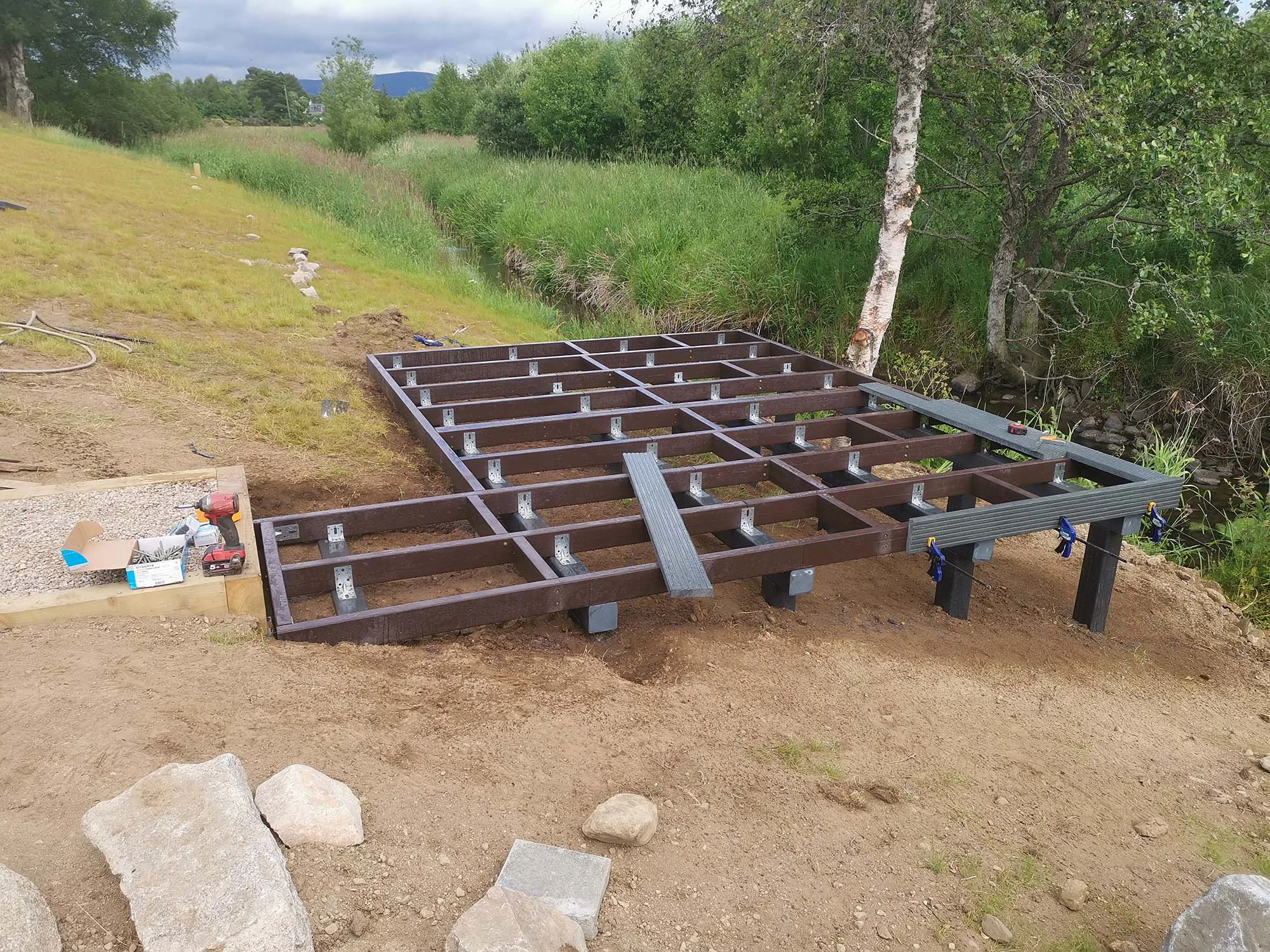
- Recycled plastic joists (best option—fully maintenance-free system)
Joist Spacing
- 400mm centres for 35mm thick boards (residential)
- 300mm centres for high-traffic areas
- Closer spacing for commercial applications
Fastening Methods
1. Face Screwing (Most Common)
- Screw through top surface into joist
- Use stainless steel screws
- Pre-drill to prevent cracking
- Countersink screw heads slightly
Pros:
- Simple and fast
- Strong connection
- Easy to replace individual boards
Cons:
- Screws visible on surface (can use colour-matched plugs)
2. Hidden Fixing Systems
- Clips attach to side of boards
- No visible fixings on surface
- More labour-intensive
Pros:
- Clean appearance
- No screw holes on walking surface
Cons:
- More expensive
- Slower installation
- Harder to replace individual boards
Expansion Gaps
Solid plastic has minimal thermal expansion compared to hollow composite:
- 3-5mm end gaps (between board ends)
- 2-3mm side gaps (between boards)
- 10mm perimeter gap (against walls/buildings)
Cutting & Drilling
- Cut with standard circular saw or mitre saw
- Use wood-cutting blades
- Pre-drill all screw holes—prevents cracking
- Countersink screw heads—flush finish
Design Flexibility
Colour Options
Solid plastic decking available in:
- Brown (timber alternative—most popular)
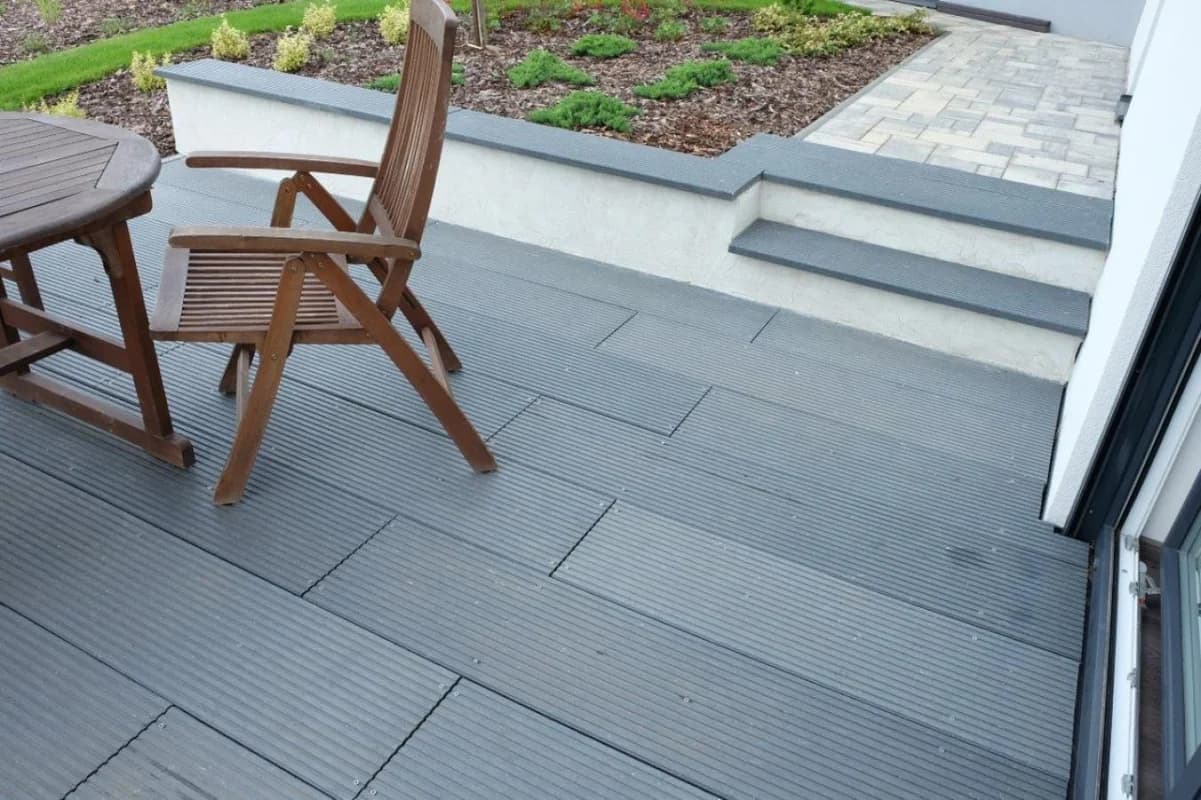
- Grey (modern aesthetic)
- Black (contemporary look)
- Mixed colours (create patterns)
Laying Patterns
- Straight lay (traditional, fastest)
- Diagonal (visually interesting)
- Herringbone (high-end look, more waste)
- Picture frame borders (define edges)
Applications
1. Residential Gardens
- Patios and entertaining areas
- Raised decks
- Balconies
- Pool surrounds (non-slip surface ideal)
2. Commercial Spaces
- Restaurant terraces
- Hotel courtyards
- Office outdoor areas
- Shopping centre walkways
3. Public Spaces
- Park boardwalks
- Waterfront promenades
- Playground surfaces
- Accessible pathways (DDA compliant)
4. Marine Environments
- Pontoons and jetties
- Boat house decking
- Marina walkways
- Coastal installations (no salt damage)
Cost Analysis: Solid Plastic vs. Timber
Initial Investment
| Material | Cost per m² (supply & install) |
|---|---|
| Pressure-treated timber | £80-£120 |
| Hardwood timber | £150-£250 |
| Hollow composite | £120-£180 |
| Solid plastic | £180-£280 |
10-Year Total Cost
Timber Decking:
- Initial installation: £100/m² × 20m² = £2,000
- Annual treatment: £400/year × 10 years = £4,000
- Board replacements: £800
- Labour: £1,500
- Total: £8,300
Solid Plastic Decking:
- Initial installation: £230/m² × 20m² = £4,600
- Maintenance: £0
- Replacements: £0
- Total: £4,600
Savings over 10 years: £3,700 (45% cheaper)
25-Year Total Cost
Timber:
- Complete replacements (2×): £4,000
- Continuous maintenance: £10,000
- Total: ~£14,000
Solid Plastic:
- Initial installation: £4,600
- Maintenance: £0
- Total: £4,600
Savings over 25 years: £9,400 (67% cheaper)
Performance Comparison Table
| Feature | Timber | Hollow Composite | Solid Plastic |
|---|---|---|---|
| Lifespan | 5-10 years | 15-20 years | 25+ years |
| Maintenance | High (annual) | Medium (periodic) | None |
| Rot Risk | High | Medium | Zero |
| Splinters | Yes | Possible | No |
| Fading | Severe | Moderate | Minimal |
| Structural Strength | Medium | Low-Medium | High |
| Moisture Damage | Yes | Yes (inside) | No |
| Slip Resistance | Poor (wet) | Good | Excellent |
| Environmental | Forestry impact | Mixed materials | 100% recycled |
Environmental Credentials
Recycled Content
- 100% recycled plastic (post-consumer waste)
- Each m² diverts approximately 25kg plastic from landfill
- No virgin plastic in production
Carbon Footprint
Compared to timber:
- No deforestation required
- Lower embodied carbon than virgin plastic
- Longer lifespan = fewer replacements = less overall impact
End-of-Life
- 100% recyclable at end of 25+ year lifespan
- Can be reground and made into new products
- Circular economy solution
Sustainability Certifications
- Recycled content verified
- UK environmental standards compliant
- Contributes to BREEAM and LEED credits
Typical Applications
Residential Garden Decking
Solid plastic boards are widely used in UK gardens as a long-term replacement for softwood decking. The absence of annual staining and the splinter-free surface make them particularly suited to family gardens with children or pets. On recycled plastic joists, the entire subframe is maintenance-free.
Commercial & Hospitality Terraces
Restaurant terraces and hotel courtyards benefit from solid plastic decking's resistance to heavy foot traffic and ease of cleaning. No annual closure for treatment means uninterrupted commercial use throughout the year.
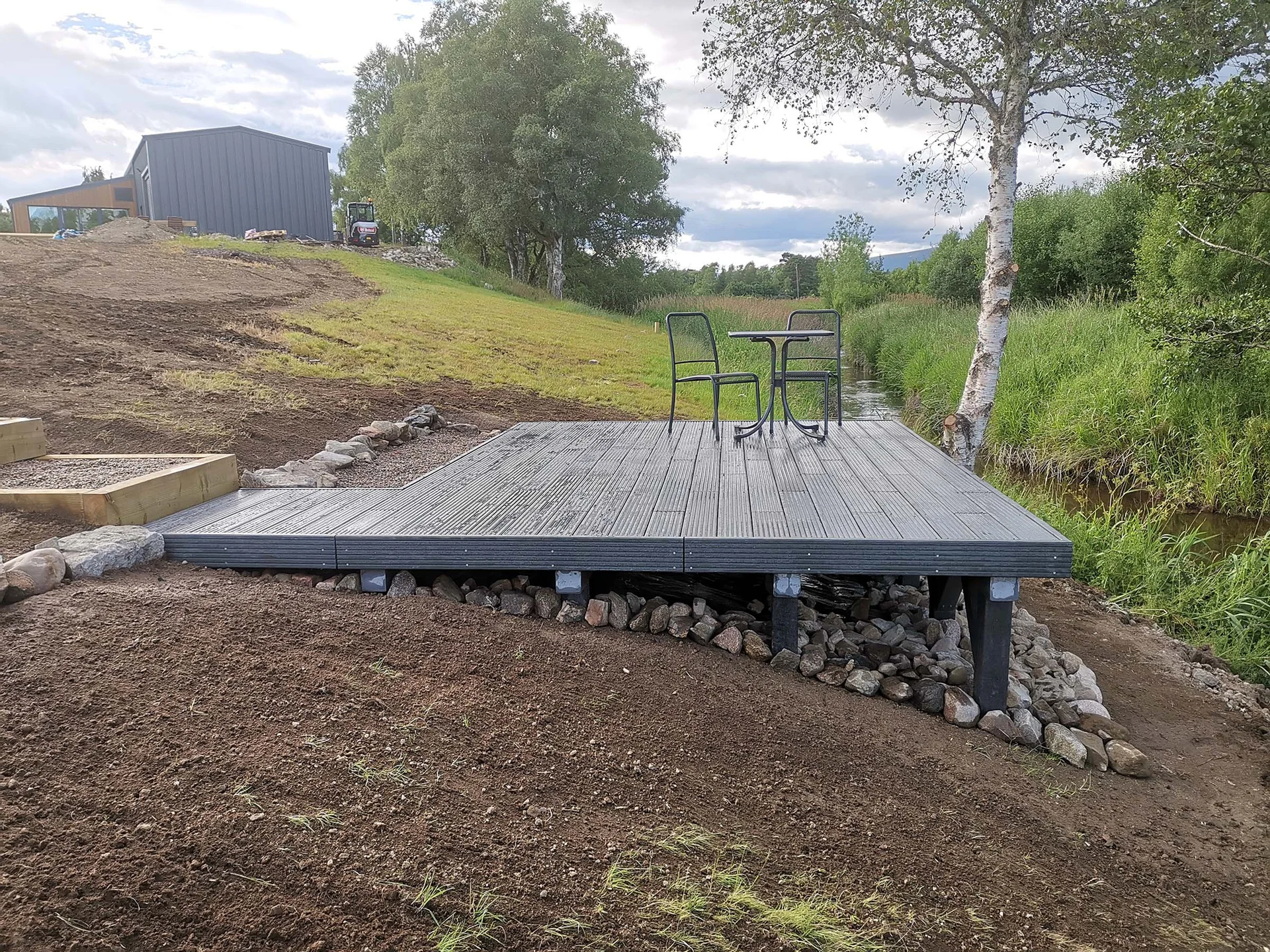
Coastal & Waterfront Installations
Salt environments are particularly harsh on both timber and metal fixings. Solid plastic boards paired with stainless steel fasteners are unaffected by salt air, making them the preferred choice for boardwalks, jetties, and coastal public spaces where timber would need replacement every few years.
Common Questions & Misconceptions
"Isn't plastic slippery when wet?"
No. Solid plastic decking has a textured, anti-slip surface that provides better grip than wet timber. It's widely used around swimming pools for this reason.
"Will it fade in the sun?"
Modern solid plastic boards contain UV stabilizers throughout the material (not just a surface coating). Minimal fading occurs over decades—far less than timber's severe greying.
"Can it handle hot weather?"
Yes. Solid plastic remains stable up to +50°C operational temperature. While it can feel warm underfoot in direct summer sun (like any dark surface), it doesn't soften or warp.
"What about scratches?"
Solid plastic is harder than timber and resists scratching from furniture. Any scratches that do occur are superficial and don't affect performance.
"Can I install it myself?"
Yes, if you're competent with basic DIY. Installation is similar to timber decking. Most homeowners with woodworking experience can install it successfully.
"Does it look like plastic?"
Modern solid plastic boards have a textured, wood-grain surface that closely mimics timber. From a distance, most people cannot tell it's plastic until they touch it.
Maintenance Guide
Daily/Weekly
- Sweep off leaves and debris
- No other action needed
Monthly
- Hose down with water (removes surface dirt)
Annually
- Pressure wash (low setting) with water or mild detergent
- Check fixings (rare—usually no issues)
Never Required
- ❌ Staining
- ❌ Oiling
- ❌ Sealing
- ❌ Sanding
- ❌ Splinter removal
- ❌ Rot treatment
That's it. Decades of use with almost zero maintenance.
How to Order
Step 1: Calculate Area
- Measure deck area in m²
- Add 5-10% for cutting waste
Step 2: Choose Board Size
- 35×120mm for standard residential
- 35×140mm for wider board aesthetic
- 40×150mm for commercial/heavy-duty
Step 3: Select Colour
- Brown (most popular—hides dirt well)
- Grey (modern look)
- Black (contemporary)
Step 4: Subframe
- Recycled plastic joists (recommended—fully maintenance-free)
- Pressure-treated timber (budget option)
- Steel frame (commercial applications)
Step 5: Fixings
- Stainless steel screws (marine grade for coastal areas)
- Hidden clip system (optional—cleaner look)
Get a Quote
Contact Ezotrade for:
- Technical advice on quantities and specifications
- Volume discounts for larger projects
- Delivery options (nationwide UK)
- Installation services (optional)
Conclusion: Future-Proof Your Outdoor Space
Solid plastic decking boards represent a fundamental upgrade from timber and hollow composite options. They eliminate the chronic problems of rot, maintenance, and structural weakness while providing a safer, cleaner, and longer-lasting solution.
For homeowners and businesses, the benefits are undeniable:
- ✅ 25+ year lifespan vs. 5-10 years for timber
- ✅ Zero maintenance costs—no staining, sealing, or treatments
- ✅ Rot-proof & waterproof—performs flawlessly in all weather
- ✅ Non-slip surface—safe for families
- ✅ Lower total cost—cheaper than timber over lifetime
- ✅ Environmentally responsible—100% recycled plastic
Build a deck that lasts a lifetime, not just a few years.
Keep Reading
- Recycled Plastic Decking Joists: The Ideal Foundation for Long-Lasting Outdoor Structures
- Installation Guide: How to Build with Recycled Plastic Lumber
- Recycled Plastic vs Timber: The Complete Comparison
Shop Related Products
Ready to upgrade your decking? Request a quote or contact our technical team for advice and pricing.