Composite Decking vs Solid Recycled Plastic Boards: Which Should You Choose?
If you've been searching for maintenance-free decking in the UK, you've almost certainly come across two terms used almost interchangeably: composite decking and recycled plastic decking. Many retailers even describe composite boards as "recycled plastic decking"—which causes enormous confusion when buyers later discover the products perform very differently.
This guide explains exactly what each material is, how it behaves in UK conditions, and which is the right choice depending on your project.
The Naming Problem: Why UK Buyers Get Confused
Walk into most UK decking retailers and you'll see timber, composite, and "plastic" decking listed side by side. The issue is that "composite decking" is a catch-all UK term that has been applied to:
- Wood-plastic composite (WPC) — the most common "composite" sold in UK DIY sheds and online marketplaces. It contains wood fibre mixed with plastic binders.
- Solid recycled plastic boards — 100% plastic, manufactured from post-consumer recycled plastic waste. No wood fibre whatsoever.
Some retailers label WPC boards as "recycled plastic decking" because the plastic component is sometimes recycled. This is technically partial but deeply misleading for anyone comparing performance.
The difference matters enormously—especially in the UK's wet climate.
What Is Composite (WPC) Decking?
Wood-plastic composite is manufactured by combining wood flour or wood fibre (typically 50–60% by weight) with a thermoplastic binder (usually polyethylene or polypropylene). The resulting board is either hollow (to save weight and material cost) or solid. Most mainstream UK composite decking is hollow-core.
What WPC Does Well
- Surface aesthetics: Embossed wood-grain textures look attractive when new.
- Available everywhere: Stocked by most UK garden centres, DIY stores, and online retailers.
- Lighter than timber: Easier to handle on site.
Where WPC Fails
The wood fibre content—which makes composite boards look and feel more "natural"—is also its fundamental weakness:
- Moisture absorption: Wood fibres absorb water. Even with a capping layer, water can enter through cut ends, fastener holes, and surface wear.
- Mould and algae growth: Moisture-laden fibre creates the perfect environment for black mould, especially on hollow-core boards that trap water inside.
- Splitting and fading: UV exposure and moisture cycles cause the composite surface to fade and eventually crack, particularly at cut ends.
- Structural weakness under load: Hollow-core boards can flex under point loads (heavy furniture, BBQs).
- Hollow board waterlogging: Water collects inside hollow profiles in heavy UK rain, adding weight and accelerating internal decay.
Typical lifespan for WPC composite: 10–15 years before significant visible deterioration.
What Is Solid Recycled Plastic Decking?
Solid recycled plastic boards are manufactured entirely from post-consumer plastic waste — typically mixed plastics from agricultural film, HDPE packaging, and similar waste streams. No wood fibre. The material is homogenous plastic all the way through.
Because there is no organic content, solid recycled plastic cannot:
- Rot
- Absorb moisture (0% water absorption)
- Support mould or algae internally
- Corrode at fixings (the surrounding plastic is inert)
Key Properties of Solid Recycled Plastic Boards
| Property | Solid Recycled Plastic | WPC Composite |
|---|---|---|
| Wood fibre content | None | 50–60% |
| Water absorption | ~0% | 1–5%+ |
| Core construction | Solid | Hollow or solid |
| Mould growth risk | None | Moderate–high (surface/internal) |
| Rot risk | None | Low–moderate (surface can degrade) |
| Lifespan | 25+ years | 10–15 years |
| Annual maintenance | None | Occasional cleaning + periodic treatment |
| UV resistance | Good (pigment throughout) | Moderate (surface only, fades at cut ends) |
| Recycled content | 100% post-consumer plastic | Partial (plastic component only) |
Head-to-Head: 7 Key Performance Categories
1. Durability in Wet UK Conditions
UK decking lives in one of the world's most persistently damp climates. This is the single most important performance factor.
WPC composite: The wood fibre component continuously absorbs and releases moisture through seasonal cycles. Over time, this repeated expansion and contraction damages the board structure. Hollow-core boards are particularly vulnerable to retaining water after heavy rain.
Solid recycled plastic: Zero water absorption. The board's composition does not change whether it's in a wet Welsh valley or a sheltered Surrey garden. Boards perform identically after 25 years as they did when installed.
Winner: Solid recycled plastic — by a wide margin in UK conditions.
2. Slip Resistance
This matters particularly for UK decking that gets rained on constantly and may be used by children and elderly users.
WPC composite: Textured grain surfaces provide reasonable slip resistance when new but can become slippery when coated in algae or degraded by UV. Regular cleaning is required to maintain grip.
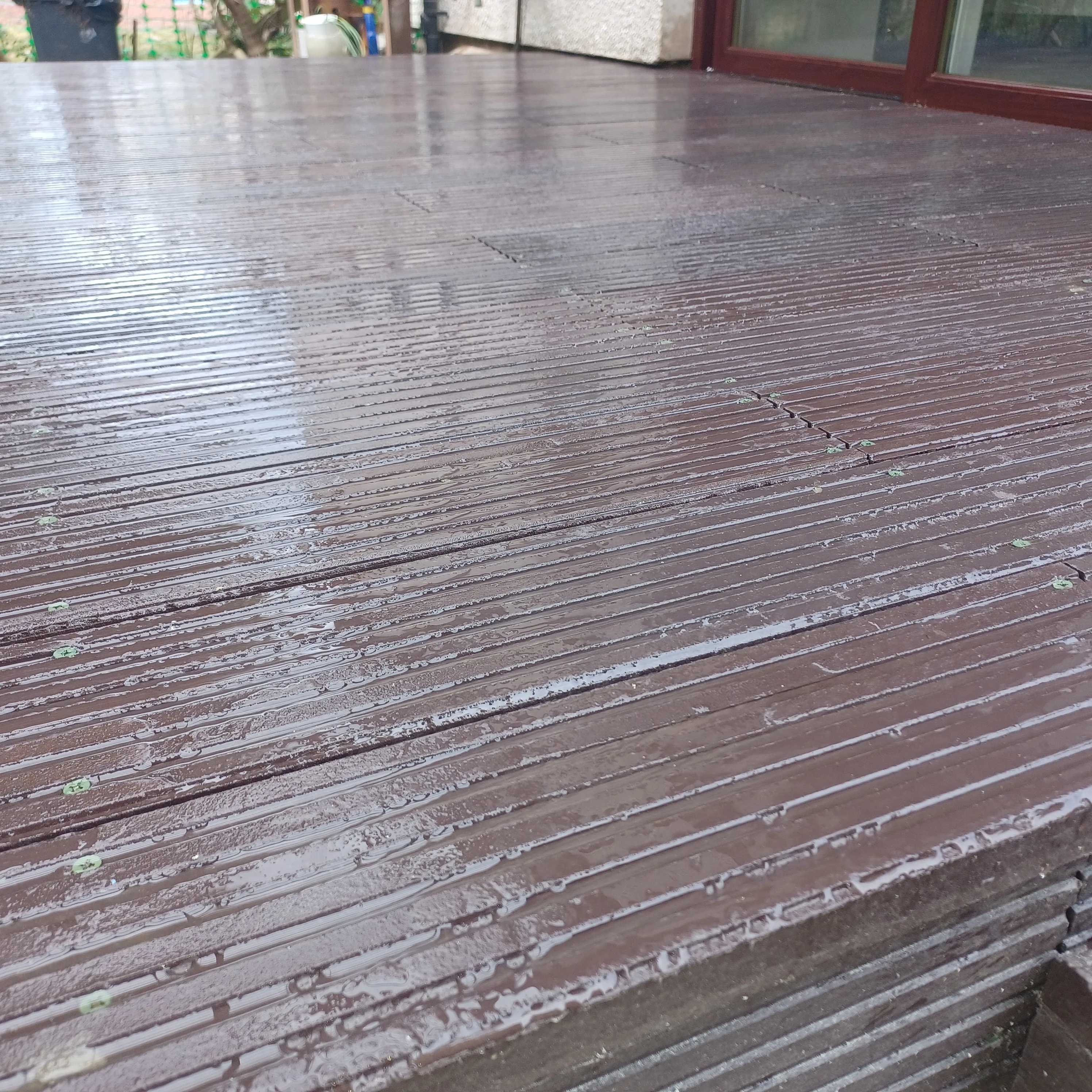
Solid recycled plastic: Our boards have a textured, grooved surface profile that channels water and provides consistent slip resistance. The surface texture is integral to the board—it does not wear away or degrade over time. No algae growth on a surface that contains no organic matter.
Winner: Solid recycled plastic — consistent slip performance without seasonal cleaning.
3. Maintenance Requirements
WPC composite: Requires regular cleaning to prevent mould and algae (typically 2–3 times per year), treatment of cut ends if exposed, and periodic inspection for hollow-core waterlogging. Some manufacturers recommend annual oiling.
Solid recycled plastic: Wash with water when it looks dirty. No oiling, no sealing, no annual treatment. The board cannot rot, cannot mould internally, and does not need preservative treatment.
Winner: Solid recycled plastic — genuinely zero maintenance.
4. Lifetime Cost
This is where solid recycled plastic consistently wins when buyers do the maths properly.
WPC composite example (32m² deck):
- Initial boards: ~£2,800–£3,800 inc VAT
- Annual maintenance (cleaning products, occasional treatment): ~£80–£120/yr
- Replacement at year 12–15: ~£3,000+
- 25-year total: ~£8,000–£10,000
Solid recycled plastic example (32m² deck):
- Initial boards: comparable price per m² to mid-range composite
- Annual maintenance: £0 (occasional wash only)
- Replacement: not required within 25+ years
- 25-year total: board cost only
The upfront price difference between solid recycled plastic and mid-range composite is smaller than most buyers expect — and the lifetime saving is significant.
Winner: Solid recycled plastic — lower total cost over any period beyond 5 years.
5. Environmental Credentials
WPC composite: The plastic binder may use recycled content, but the wood fibre is typically virgin material (sawdust and wood flour from production waste). The mixed material is very difficult to recycle at end of life.
Solid recycled plastic: Made from 100% post-consumer plastic waste. At end of life, solid recycled plastic boards can potentially be recycled again — unlike composite boards whose mixed material composition makes them very difficult to process.
Winner: Solid recycled plastic — genuinely circular material.
6. Ease of Installation
WPC composite: Lightweight hollow boards are easy to handle. Most systems use hidden clip fixings. Cutting is straightforward but cut ends must be treated or sealed to prevent moisture ingress.
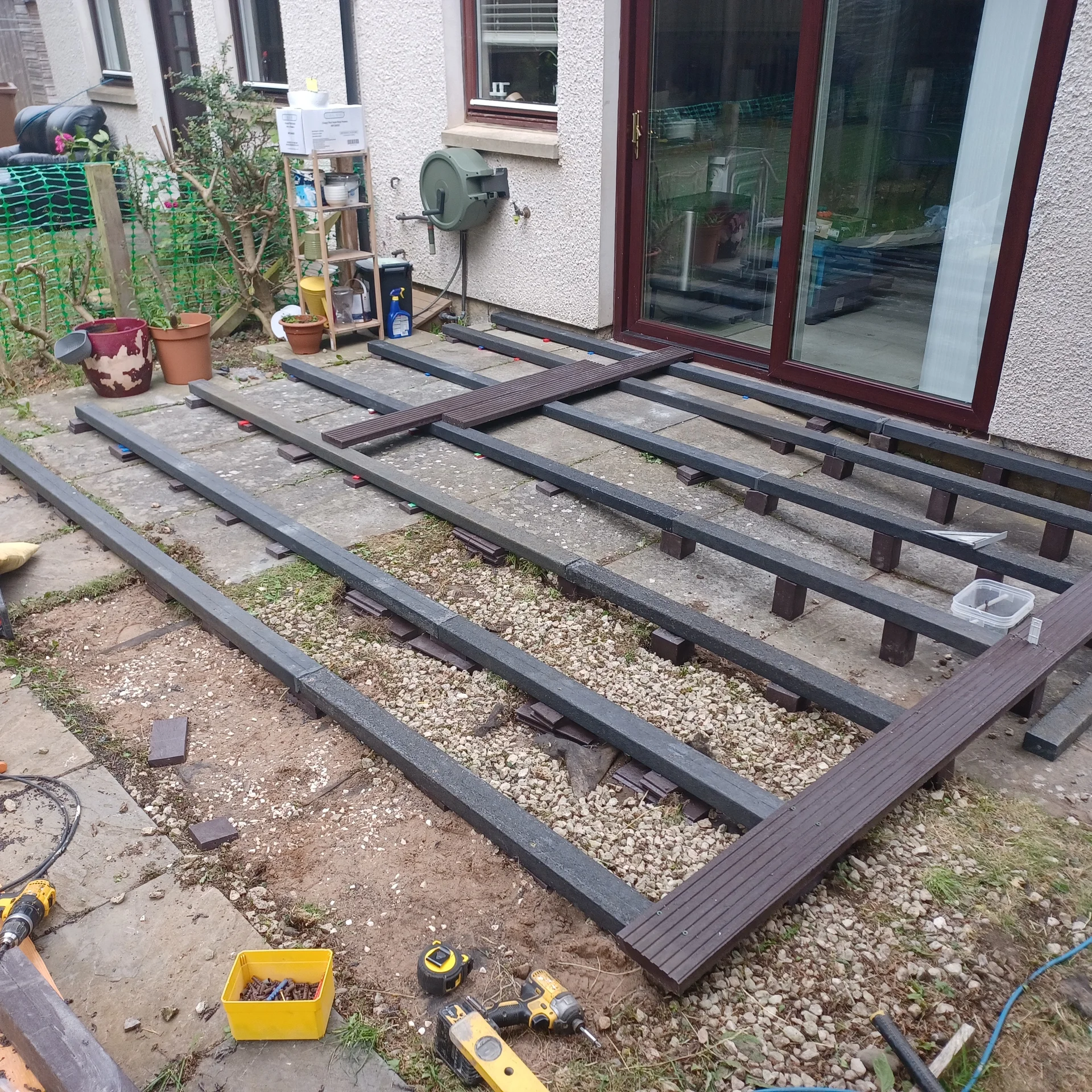
Solid recycled plastic: Solid boards are heavier than hollow composite. You need to drill pilot holes before fixing — solid plastic is dense and can crack if you drive screws without piloting. Allow for thermal expansion gaps: solid plastic expands and contracts with temperature (approximately 3–5mm per 3.6m board between summer and winter extremes in the UK). Leave 5–8mm between board ends at walls or fixed edges.
Neither material is particularly difficult for a competent DIYer or installer. The installation requirements are different, not harder.
Winner: Draw — WPC is slightly lighter; solid recycled plastic needs more careful thermal allowance.
7. Aesthetic Options
WPC composite: Available in a wider range of colour finishes and surface textures. Some premium WPC products closely mimic tropical hardwood grain patterns. Colours are surface-only and may fade at cut ends.
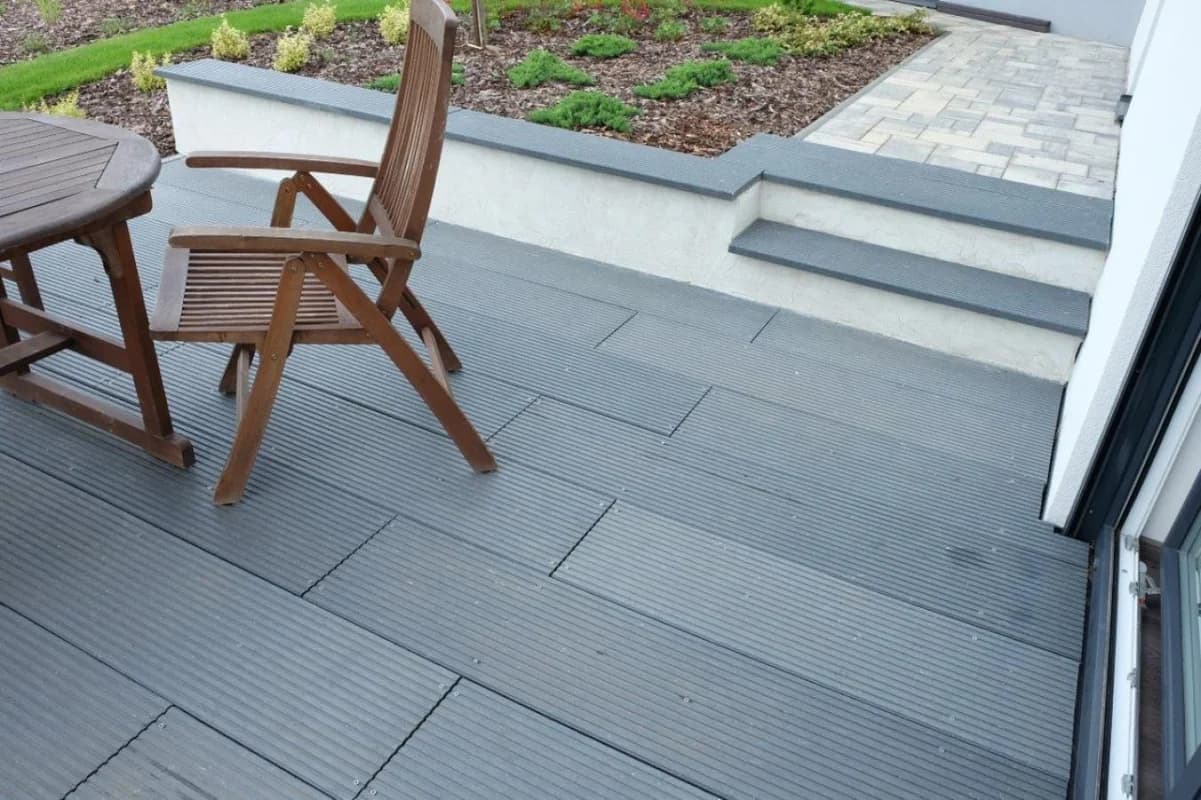
Solid recycled plastic: Typically available in a smaller range of colours (most commonly mid-grey, brown, and green shades). Colour runs through the full board depth — no fade at cut ends. Less wood-like in appearance, more utilitarian.
Winner: WPC composite — broader aesthetic range, better for design-led projects where appearance is paramount.
Which Should You Choose?
Choose solid recycled plastic if:
- Your deck will be in permanent exposure to UK rain and damp (the majority of UK gardens)
- You want genuinely zero maintenance — nothing, ever
- You're in a high-use environment: commercial, public, agricultural, or equestrian
- Slip resistance and safety are important (children, elderly users, pet areas)
- You want the lowest total cost over 10+ years
- Environmental credentials matter (genuinely recycled, potentially recyclable)
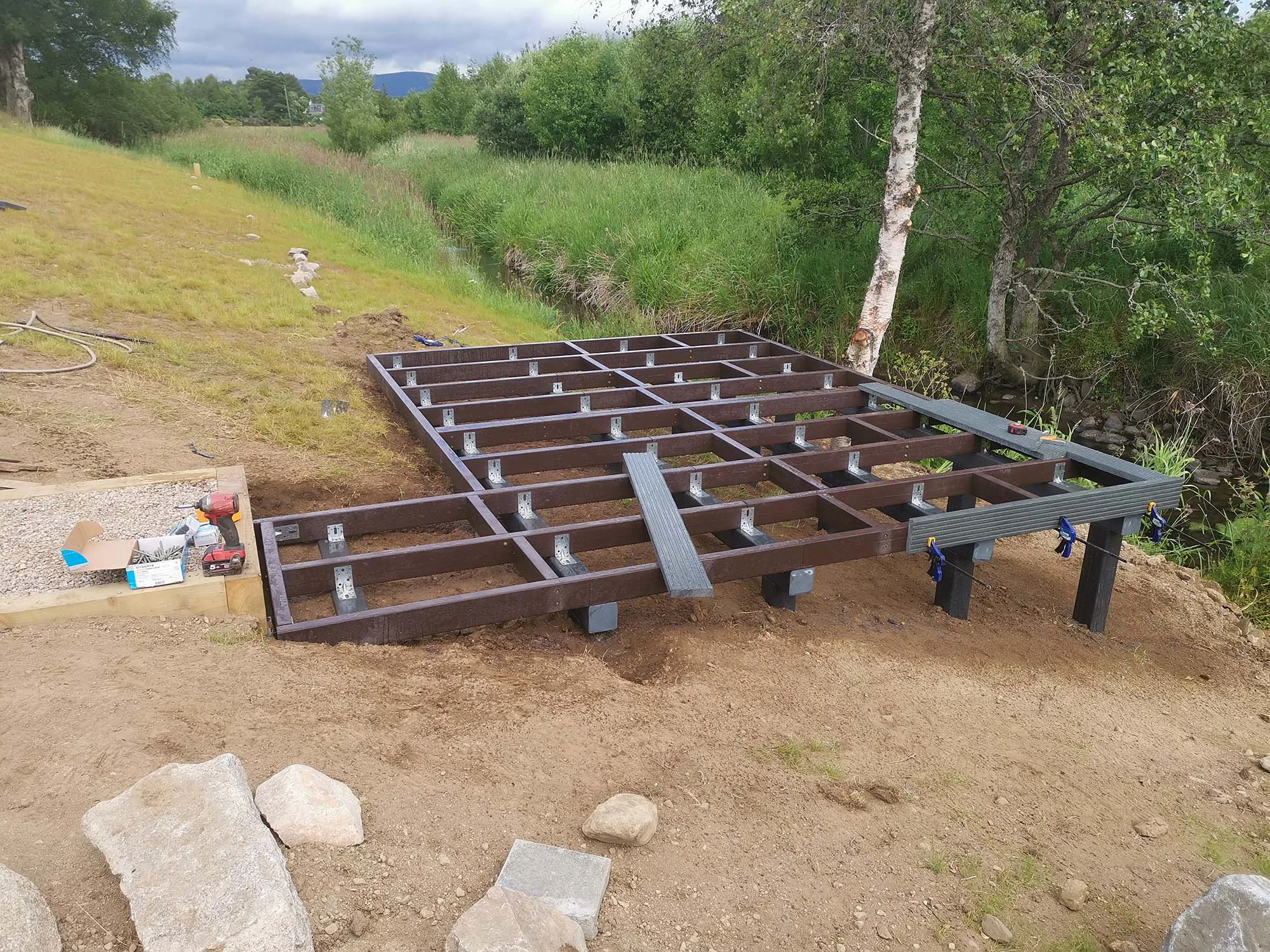
- Ground-contact sections are involved (posts, joists, ground-level boards)
Choose composite (WPC) if:
- Appearance and aesthetic match are the primary priority
- You want the closest visual match to hardwood decking
- The deck will be in a sheltered, well-drained position with low traffic
- Lighter boards are important for the installation situation
- Budget is very constrained on the initial purchase price
The Bottom Line
Most UK buyers searching for "maintenance-free decking" actually want solid recycled plastic, not wood-plastic composite — they just don't know the distinction exists because UK retail has blurred the categories.
If you genuinely want:
- No rotting
- No mould
- No annual maintenance
- No replacement cost in 15 years
...then solid recycled plastic is the only category that delivers all four. WPC composite is a significant upgrade over timber — but it is not the same as solid recycled plastic, and the UK climate exposes that gap over time.
Ezotrade supplies solid recycled plastic decking boards, subframe joists, fence posts, stable boards, and agricultural lumber profiles — all manufactured to perform in the environments where timber and composite fall short.
Keep Reading
- Solid Plastic Decking Boards: Complete Guide
- Recycled Plastic vs Timber: Full Comparison for UK Projects
- Recycled Plastic Decking Joists: Subframe Guide
Shop Related Products
Not sure which board size or product is right for your project? Get in touch — we'll give you straight technical advice and a no-obligation quote.